Sep 20, 2026OEM & Manufacturing Insights
Brake Pad Trial Order Guide for Distributors & Importers
Learn how brake pad distributors and importers can plan a trial order, choose SKUs, set quantities, evaluate products and reduce risk before bulk purchasing.
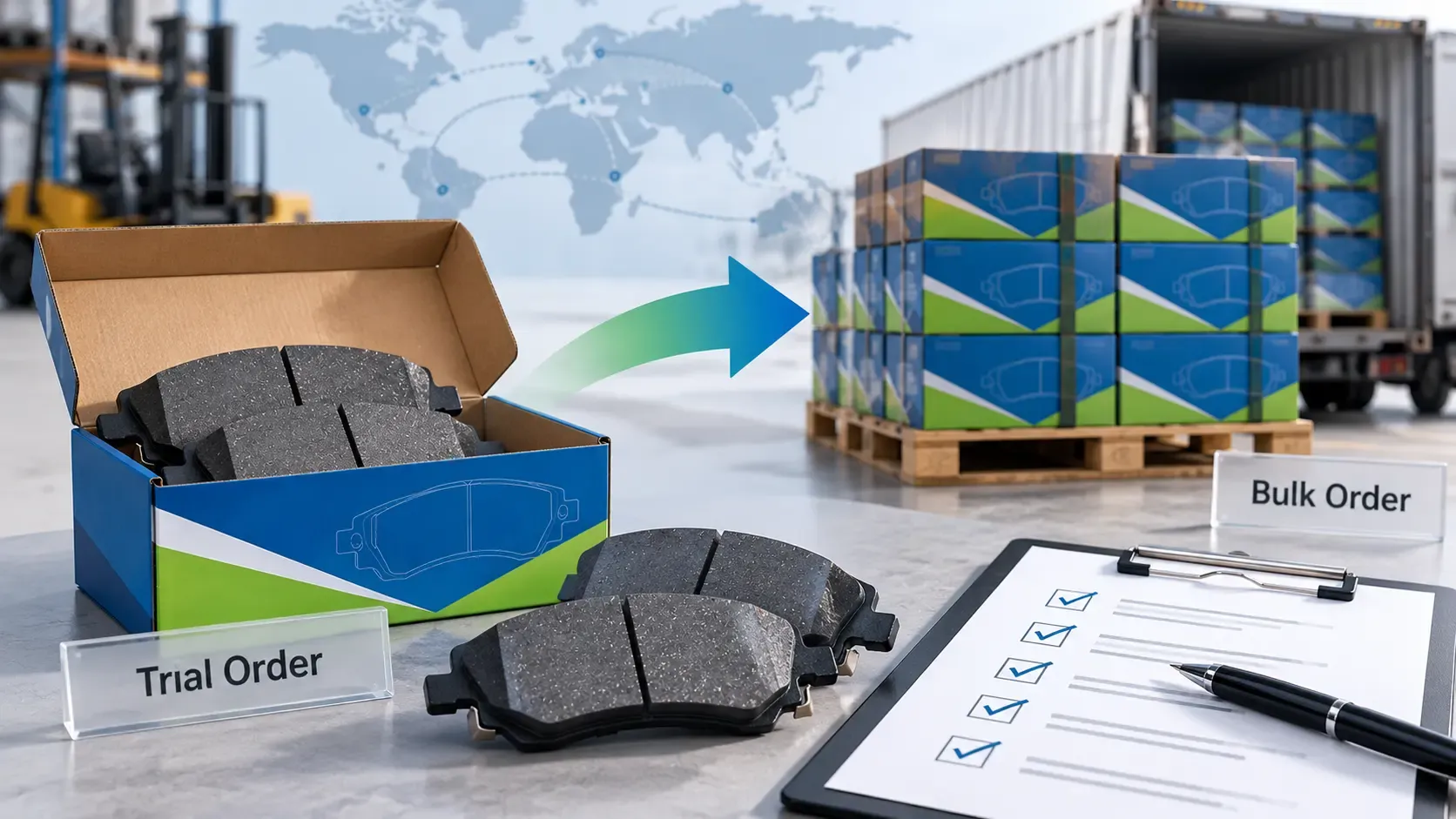
Brake Pad Trial Order: How Distributors Can Reduce Risk Before Bulk Purchasing
You have received the quotation.
The samples look acceptable.
The supplier has answered your technical questions.
Now comes a harder decision:
How much should you actually order from a new brake pad supplier?
Ordering too much creates inventory and supplier risk. But making the first order extremely small does not necessarily solve the problem either.
For brake pad distributors, importers and private-label brands, a trial order should have a clear purpose.
The goal of a trial order is not to make the first order as small as possible. It is to make the first order informative enough to support the next decision.
A well-planned trial order should help you evaluate three things before scaling up:
Product. Process. Market.
Here is how to approach it.
1. A Sample Order and a Trial Order Are Not the Same Thing
Samples are useful for initial product evaluation.
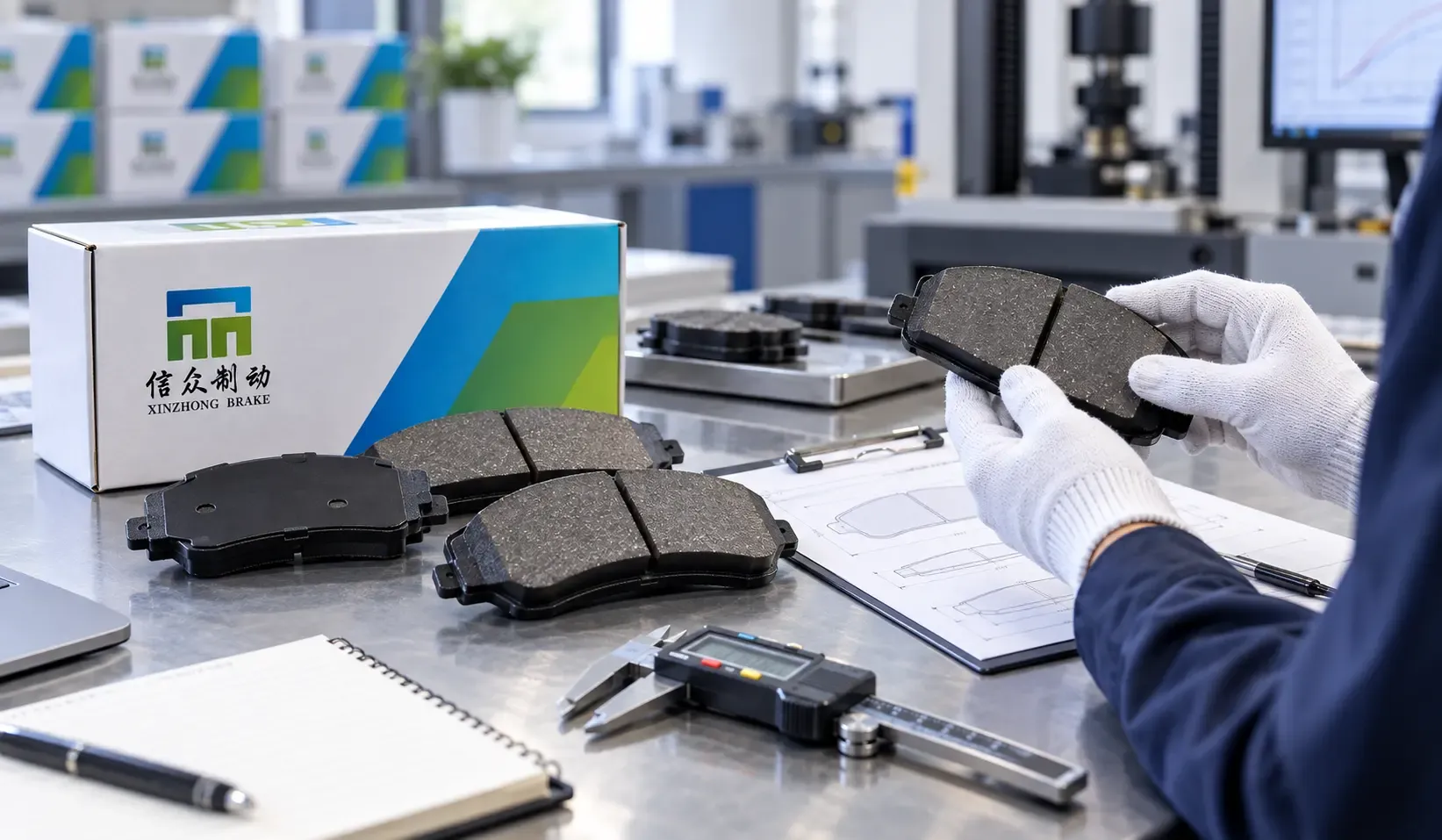
You can inspect pad shape, dimensions, friction material, backing plate, shims, accessories, markings and packaging. Depending on your quality-control process, samples can also be used for testing.
But a few sample sets cannot tell you everything about a supplier.
A trial order goes one step further.
It allows you to evaluate how the supplier handles an actual commercial order across multiple references and larger quantities.
That includes not only product quality, but also:
- Order confirmation
- Reference matching
- Production consistency
- Packaging
- Labeling
- Carton organization
- Documentation
- Delivery
- Communication
Before placing a trial order, you can use our guide on how to evaluate brake pad samples before bulk ordering to complete the initial sample review.
2. Do Not Test Too Many SKUs at Once
One common mistake is trying to test an entire brake pad range with a new supplier.
For example, a distributor may have 300 or 500 references in its current program and send the whole list for quotation.
That is useful for checking supplier coverage.
It does not mean all 500 references should be included in the first commercial order.
A better approach is to build a smaller trial-order group that represents your actual business.
The exact number will depend on your market, sales volume and sourcing strategy. The principle matters more than a fixed SKU count.
Your trial group should be large enough to reveal whether the supplier can handle different references correctly, but controlled enough that problems remain manageable.
3. Start With SKUs You Actually Understand
Your first order with a new supplier is usually not the best place to experiment with unfamiliar applications.
Consider starting with brake pad references for which you already have:
- Existing sales history
- Known vehicle applications
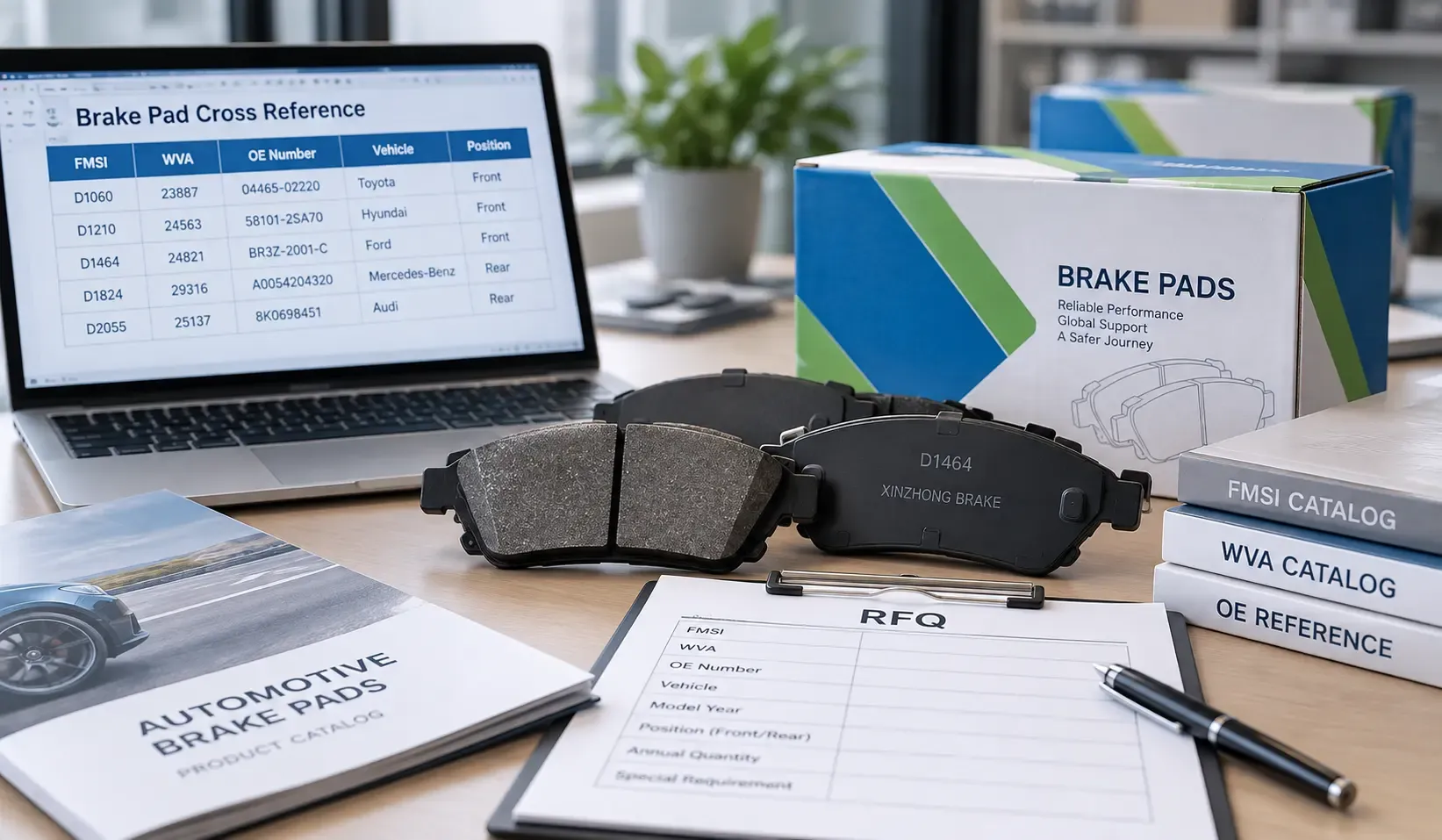
- Reliable OE/FMSI/WVA cross-references
- Previous customer feedback
- Existing product samples for comparison
Why?
Because you already have a benchmark.
If you know how a reference normally sells, looks, fits and performs, evaluating a new supplier becomes much easier.
A trial order should reduce uncertainty, not create more of it.
4. Include Different Types of References
There is another extreme to avoid.
If you test only one easy, high-volume brake pad reference, you may learn very little about the supplier's broader capabilities.
Consider building a trial order with a reasonable mix of products relevant to your business.
For example, you might include:
Trial Group | What It Can Help Evaluate |
|---|---|
High-volume references | Core product consistency and commercial viability |
Different pad shapes | Production and identification accuracy |
Front and rear applications | Range-handling capability |
References with accessories | Hardware and packing accuracy |
Private-label products | Packaging and labeling execution |
This does not mean deliberately choosing difficult products.
The goal is simply to make the first order representative enough to tell you something useful.
5. Set Quantities Based on What You Want to Learn
There is no universal “correct” quantity for a brake pad trial order.
A distributor testing a new supplier for five fast-moving references has a different situation from a private-label brand launching 30 new SKUs.
Instead of asking:
What is the smallest MOQ I can order?
Ask:
What quantity gives us enough product to evaluate the supplier without creating unnecessary inventory exposure?
This changes the conversation.
MOQ still matters, especially when multiple brake pad references are combined in one order. But MOQ should be considered alongside sales velocity, packaging requirements and the purpose of the trial.
6. Freeze the Specification Before Production
A trial order cannot give you useful information if the specification keeps changing.
Before production, both buyer and supplier should confirm the key requirements.
Depending on the project, these may include:
- FMSI, WVA or OE reference
- Vehicle application
- Front or rear position
- Dimensions
- Friction material
- Shim specification
- Wear sensor
- Clips or other accessories
- Product markings
- Packaging
- Label information
- Quantity
For private-label projects, artwork approval should also happen before mass printing.
This gives you a baseline.
When the goods arrive, you can compare what was delivered against what was actually approved.
If you are still at the quotation stage, our brake pad RFQ checklist explains what information to provide before requesting a commercial offer.
7. Use the Trial Order to Evaluate Product Consistency
A good sample is important.
But distributors do not sell one sample.
They sell repeated production.
That is why a trial order should be used to look beyond whether one set of pads “looks good.”
Check whether products within the same reference are consistent in areas such as:
- Dimensions and shape
- Friction-material appearance
- Backing plate
- Shim installation
- Accessories
- Surface finish
- Marking
- Packaging and labels
If your quality plan includes dimensional inspection or performance testing, define those checks before the goods arrive.
You can also refer to our brake pad testing and quality control guide for a broader look at supplier quality evaluation.
8. Evaluate the Supplier's Process, Not Just the Brake Pad
This is one of the most important parts of a trial order.
Imagine the brake pads themselves are acceptable, but:
the cartons contain incorrect labels,
several references are mixed,
the packing list does not match the goods,
or changes agreed before production were not implemented.
You still have a supplier problem.
B2B purchasing is not only about buying a product.
You are buying the supplier's ability to repeatedly execute a specification.
During the trial order, pay attention to how the supplier handles:
Confirmation → Production → QC → Packaging → Documentation → Shipment
Problems found here are valuable information before you increase the order size.
9. Private-Label Buyers Should Treat Packaging as Part of the Product
For distributors building their own brake pad brand, packaging should not be treated as decoration added at the end.
Check:
- Box dimensions
- Print quality
- Brand artwork
- Part numbers
- Barcodes
- Application labels
- Country-of-origin information where required
- Inner and master carton arrangement
A technically acceptable brake pad arriving in the wrong box can still create warehouse and customer-service problems.
This becomes increasingly important as your SKU count grows.
Our guide to private-label brake pad packaging covers this part of the sourcing process in more detail.
10. Do Not Judge the Trial Order Only by Complaint Rate
Suppose you receive a trial shipment and there are no immediate customer complaints.
That is encouraging.
But it does not automatically mean the supplier has passed every part of your evaluation.
Look at the whole project.
Were the correct references delivered?
Was the specification followed?
Was production reasonably consistent?
Were packaging and labels correct?
Did the shipment arrive as agreed?
Were documents accurate?
Did the supplier respond properly when questions appeared?
And finally:
How did the products perform in your actual market?
The last question takes time.
That is why supplier evaluation should continue after the shipment reaches your warehouse.
11. Decide What Happens After the Trial
A trial order should end with a decision, not simply another identical trial order.
Depending on the results, you may:
Scale up
Increase quantities or add more references when the product and process meet expectations.
Expand gradually
Keep the successful references and introduce additional SKUs step by step.
Correct and retest
If a specific issue is identifiable and correctable, agree on corrective action before the next order.
Stop the project
If the supplier cannot reliably meet critical requirements, increasing volume only increases exposure.
This is why the first order should generate information.
You are not merely testing brake pads.
You are testing whether the supplier is ready to become part of your supply chain.
A Simple Trial Order Evaluation Framework
After the order, evaluate the supplier across three areas:
Area | Key Question |
|---|---|
Product | Did the brake pads meet the agreed specification consistently? |
Process | Did the supplier execute the order accurately and reliably? |
Market | Did the products fit the needs of your customers and sales program? |
If all three are positive, you have a much stronger basis for increasing volume.
If one fails, you know where the next discussion should begin.
Planning Your First Brake Pad Order With a New Supplier?
If you already have a purchasing list, you do not need to move the entire program to a new supplier at once.
You can start with selected references and build a trial order around your target market, expected sales volume, friction-material requirements and packaging needs.
Xinzhong Brake supports OEM, private-label and wholesale brake pad projects for distributors and importers.
Send us your current FMSI, WVA, OE or application list, and we can review the references with you before quotation and trial-order planning.