Aug 14, 2026OEM & Manufacturing Insights
Brake Pad MOQ: What Distributors Should Know Before Ordering
Learn how brake pad MOQ works for OEM and wholesale orders, including mixed references, custom packaging, materials, and key factors distributors should consider.
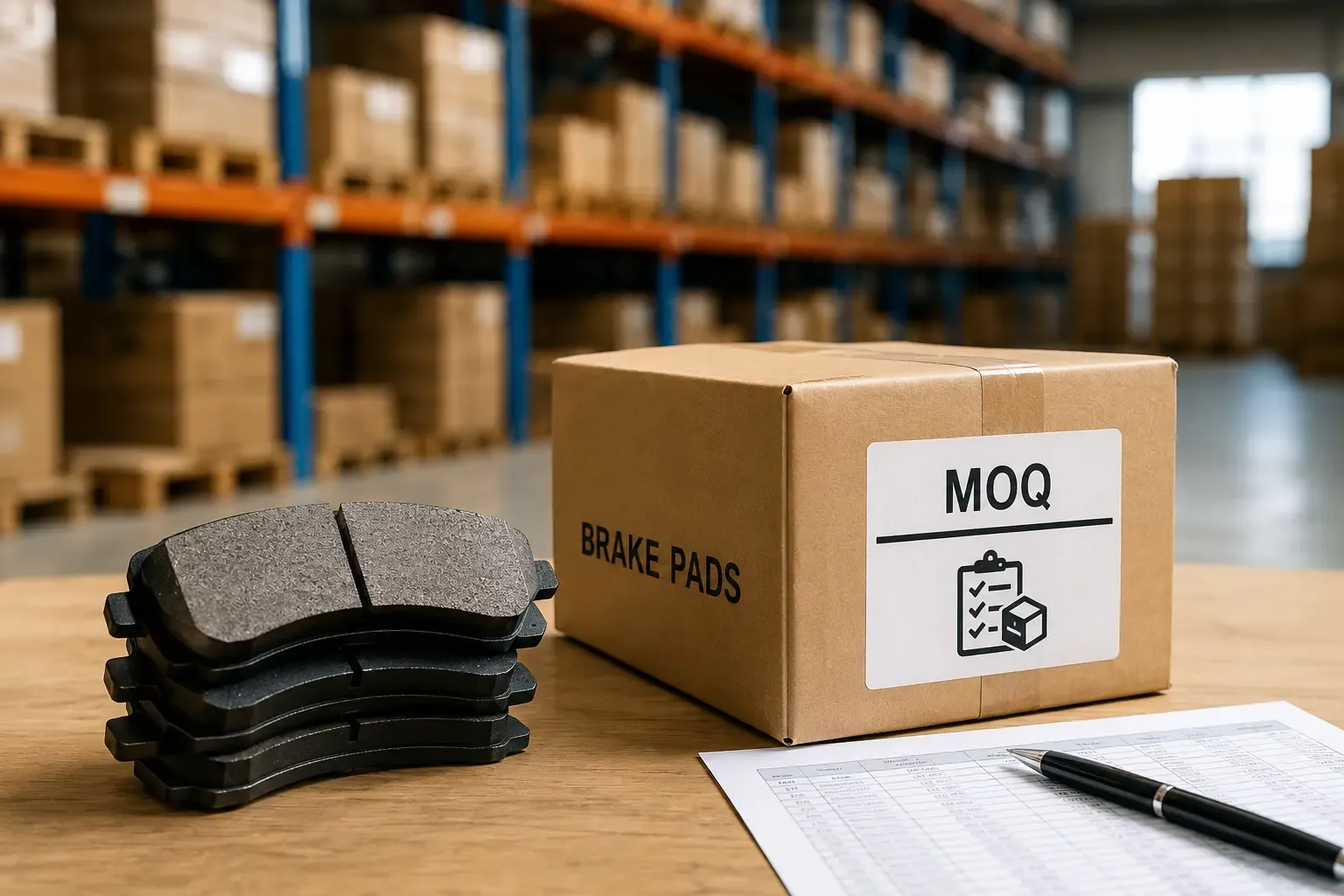
For distributors and importers sourcing brake pads directly from a manufacturer, MOQ is not simply a fixed number of brake pad sets.
The actual minimum order quantity can depend on the brake pad reference, friction material, packaging requirements, production schedule, and whether multiple part numbers are combined in one order.
For buyers managing hundreds or even thousands of vehicle applications, understanding how brake pad MOQ works can help reduce inventory pressure and make sourcing more efficient.
What Is the Typical MOQ for Brake Pads?
There is no universal MOQ for OEM brake pads.
A manufacturer may calculate minimum quantities based on:
- Individual brake pad reference
- Total order quantity
- Friction material
- Production batch requirements
- Custom packaging
- Private label requirements
- Number of references included in the order
This means two orders with the same total quantity may have very different production requirements.
For example, ordering 10,000 sets across a small number of popular references is very different from ordering the same quantity across hundreds of references.
For distributors, the second situation is often much more common.
Why Do Brake Pad Manufacturers Have MOQ Requirements?
Brake pad production involves more than simply selecting a backing plate and friction material.
For each production batch, manufacturers may need to arrange raw materials, backing plates, molds, friction material preparation, pressing, curing, grinding, testing, marking and packaging.
Very small quantities of an individual reference can therefore increase production complexity and cost.
MOQ helps the manufacturer maintain efficient production while keeping the final brake pad price commercially competitive.
However, a good B2B brake pad supplier should not only tell buyers:
Our MOQ is X sets.
The more important question is:
How can the order structure be optimized for the buyer's market?
Can Different Brake Pad References Be Mixed in One Order?
For distributors, this is one of the most important questions to ask a brake pad manufacturer.
Most automotive aftermarket buyers do not need only one brake pad reference.
They may need dozens or hundreds of part numbers covering different vehicle applications.
A flexible supplier may allow buyers to combine multiple brake pad references within one larger order, subject to production feasibility and minimum quantities for individual references.
This can help distributors:
- Expand vehicle coverage
- Reduce inventory pressure
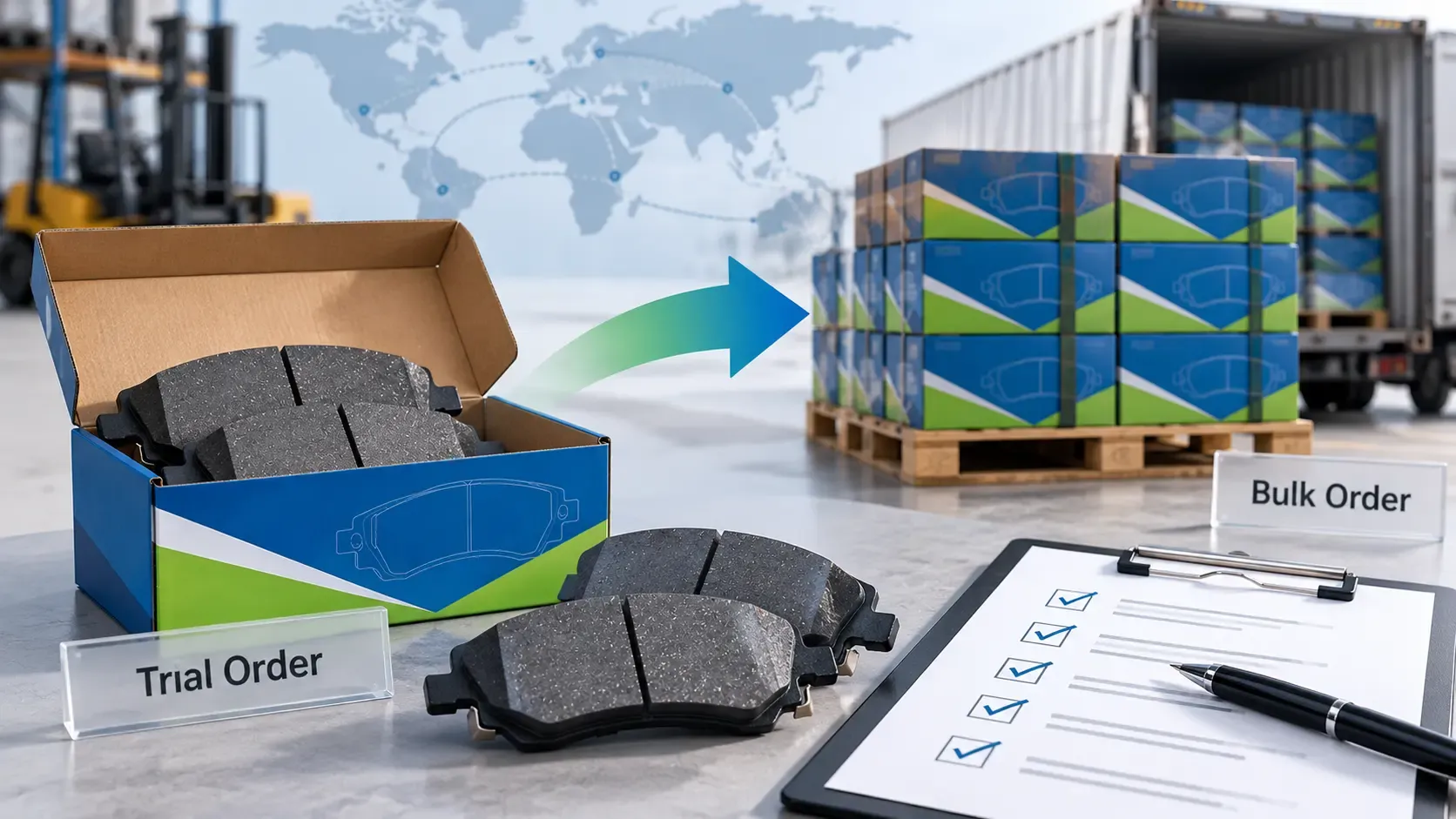
- Test new references
- Replenish slow-moving SKUs more efficiently
- Avoid purchasing excessive quantities of one part number
For buyers entering a new market, this flexibility can be more valuable than simply receiving the lowest unit price.
Does Friction Material Affect MOQ?
Yes.
Different friction materials require different formulations and production arrangements.
Common brake pad materials include:
Ceramic Brake Pads
Ceramic formulations are widely used for passenger vehicles where low noise, low dust and comfortable braking characteristics are important.
Semi-Metallic Brake Pads
Semi-metallic formulations provide strong braking performance and durability across a wide range of operating conditions.
Low-Metallic Brake Pads
Low-metallic formulations balance braking response, heat dissipation and cost, making them common in many aftermarket applications.
NAO Brake Pads
Non-asbestos organic formulations can be developed for different vehicle applications and market requirements.
When sourcing several friction materials in the same order, buyers should confirm whether the MOQ is calculated separately for each formulation or according to the overall order.
How Does Private Label Packaging Affect MOQ?
Private label brake pads normally require additional production steps compared with standard factory packaging.
These may include:
- Custom printed boxes
- Brand logos
- Product labels
- Barcodes
- Part number labels
- Installation information
- Carton markings
- Customized accessories
In many cases, the MOQ for custom packaging is determined not only by the brake pad factory but also by the packaging supplier.
For example, the brake pads themselves may support a relatively flexible quantity, while custom printed boxes require a larger printing batch.
This is why distributors should discuss product MOQ and packaging MOQ separately.
Low MOQ Is Not Always the Best Choice
Buyers naturally prefer lower minimum order quantities, especially when testing a new supplier.
But extremely low MOQ is not automatically an advantage.
Small production batches can increase:
- Unit production cost
- Packaging cost
- Production complexity
- Lead time uncertainty
The goal should not simply be to find the lowest possible MOQ.
The better goal is to find a brake pad manufacturer that can balance MOQ, price, product coverage and production stability.
For an established distributor, reliable repeat supply is usually more valuable than saving a small amount on the first order.
What Should Distributors Ask Before Placing an Order?
Before requesting a final quotation, distributors should provide the manufacturer with as much information as possible.
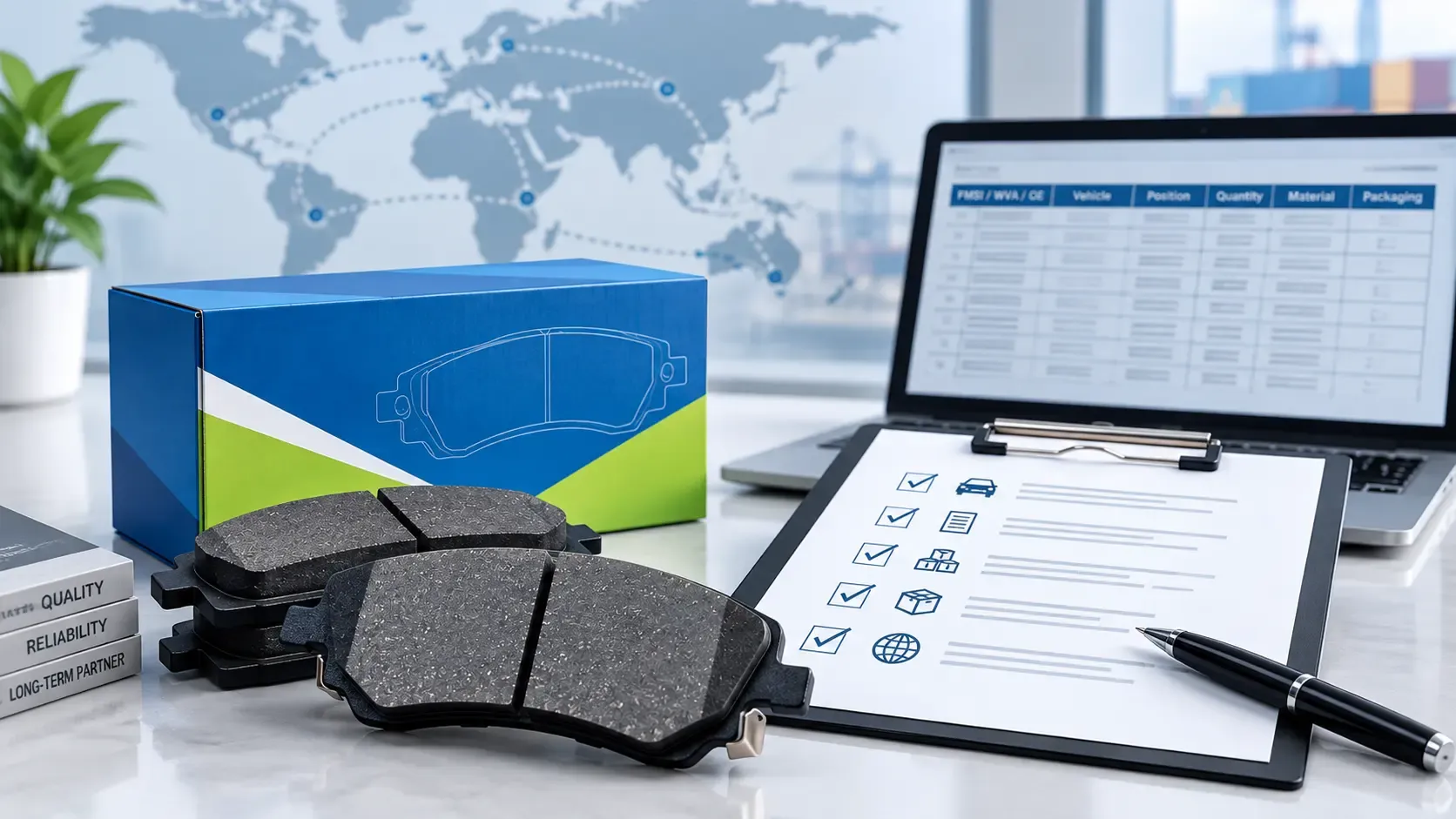
A useful brake pad inquiry should include:
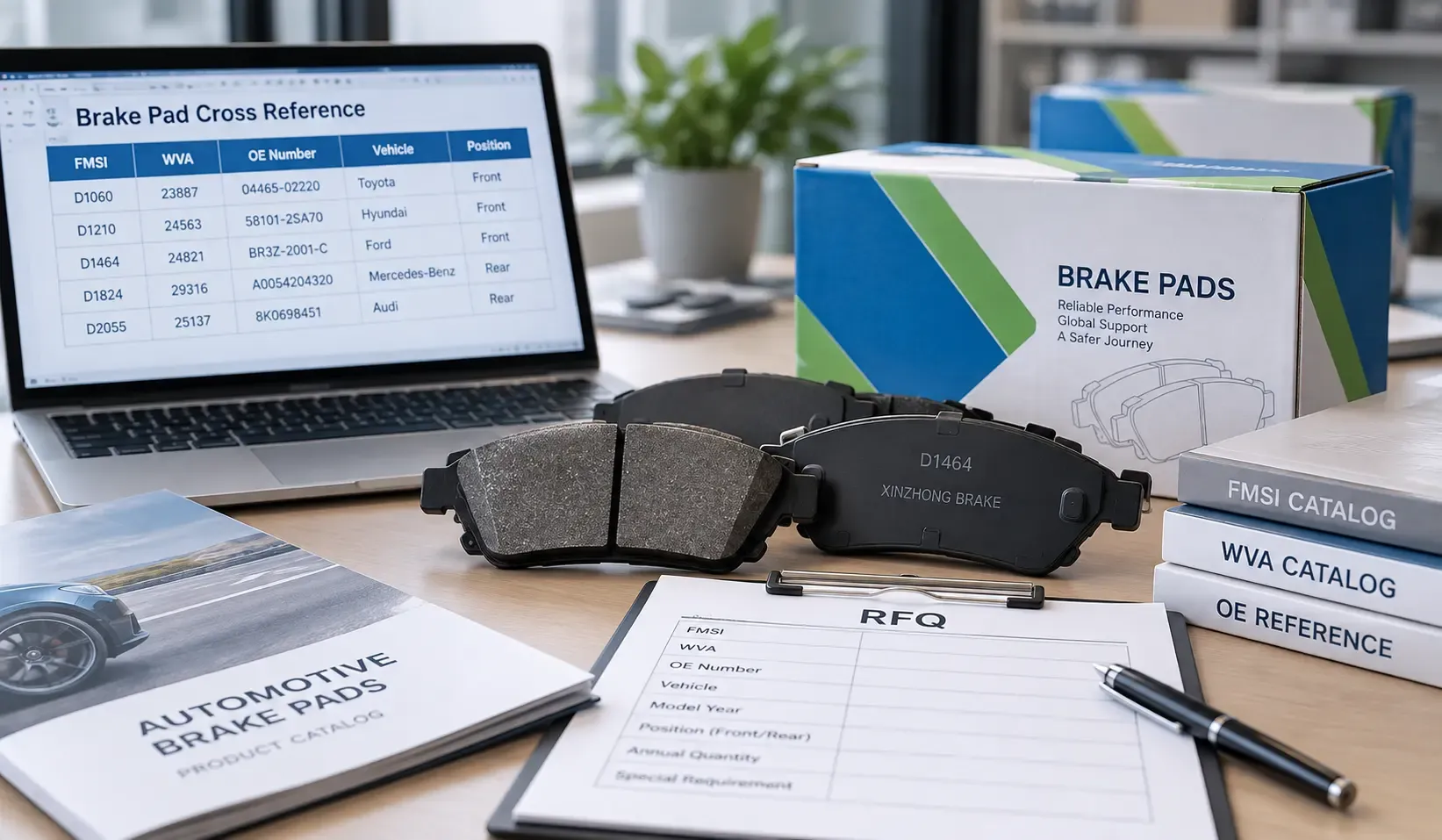
- Brake pad part numbers or reference numbers
- Required quantity for each reference
- Target market
- Required friction material
- Quality or performance requirements
- Packaging requirements
- Private label requirements
- Estimated annual purchasing volume
Providing this information allows the manufacturer to evaluate the order as a complete sourcing project rather than quoting individual products without context.
Working With a Flexible Brake Pad Manufacturer
Xinzhong Brake (Qingdao) Auto Parts Co., Ltd. is an IATF 16949 and ISO 9001 certified brake pad manufacturerserving distributors, importers and private label customers.
Our product range covers more than 6,600 brake pad references, supported by over 200 friction material formulations for passenger cars and commercial vehicle applications.
For B2B orders involving multiple references, our team can evaluate the complete purchasing list and recommend a practical order structure based on product availability, formulation, packaging and production requirements.
OEM and private label services are also available for customers developing their own brake pad brands.
Conclusion
Brake pad MOQ should not be evaluated as a single number.
For distributors, the more important factors are reference flexibility, product coverage, packaging requirements, production efficiency and long-term supply stability.
If you are preparing a brake pad purchasing list, send us your part numbers, quantities and packaging requirements.
Our team can review the list and recommend a suitable OEM or wholesale production solution.
FAQ
What is the MOQ for OEM brake pads?
MOQ depends on the brake pad reference, friction material, packaging and total order structure. For multi-reference distributor orders, the complete purchasing list should be evaluated before confirming the final MOQ.
Can I order multiple brake pad references in one shipment?
Yes, multi-reference orders can be evaluated according to the quantity of each part number and overall production requirements. This is common for distributors requiring broad vehicle coverage.
Can I use my own brand and packaging?
Yes. Private label brake pad services can include customized boxes, labels, logos, barcodes and outer carton markings depending on order requirements.
Can I send my brake pad part number list for quotation?
Yes. Providing a complete part number or reference list is usually the most efficient way to request a B2B quotation. Include the required quantity for each reference whenever possible.
Do you manufacture different brake pad materials?
Yes. Different friction material solutions are available for passenger car and commercial vehicle applications, including ceramic, semi-metallic, low-metallic and NAO formulations.