Brake Pad Knowledge
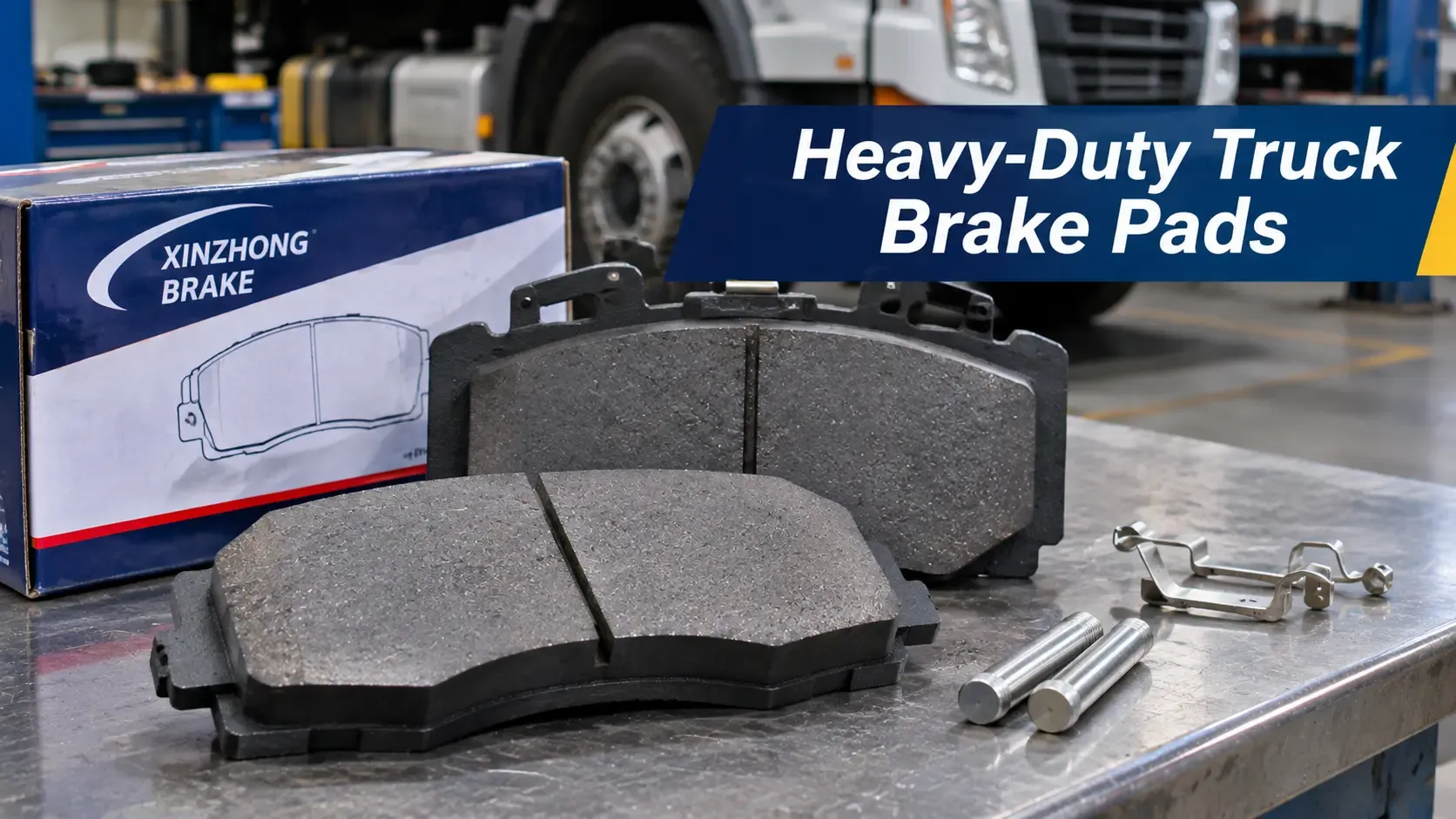
Heavy-Duty Truck Brake Pads: How to Verify WVA Numbers and Fitment Before Ordering
Learn how to source heavy-duty truck brake pads using WVA numbers, OE references, caliper identification and dimensional checks. A practical guide for importers and distributors.
Heavy-Duty Truck Brake Pads: How to Verify WVA Numbers and Fitment Before Ordering
Sourcing brake pads for heavy-duty trucks is different from sourcing passenger car brake pads.
For overseas importers and distributors, identifying the correct truck brake pad involves more than matching a vehicle brand or finding a familiar part number.
Two trucks from the same manufacturer may use different braking systems depending on their production year, axle configuration, operating market and brake equipment.
This makes accurate product identification essential before requesting a quotation or placing a bulk order.
In this guide, we explain how to use WVA numbers, OE references, caliper information and physical dimensions to source commercial vehicle disc brake pads more confidently.
1. Why Heavy-Duty Truck Brake Pad Identification Is More Complex
Commercial vehicles operate under demanding conditions.
Long-distance trucks, urban buses, construction vehicles and delivery fleets can experience very different braking loads and operating environments.
Their brake systems are also more varied than buyers might expect.
A truck manufacturer may use braking components supplied by different system manufacturers across its vehicle range.
For example, commercial vehicle disc brake systems may involve equipment from:
- Knorr-Bremse
- WABCO / ZF
- Meritor
- Bendix
- Haldex
These are examples of braking system manufacturers, not a guarantee that every product associated with them is interchangeable.
The same vehicle brand may therefore require different brake pads depending on its actual braking system.
For importers, the most reliable approach is to identify the installed brake system and verify the required components before confirming an order.
2. Understanding WVA Numbers for Truck Brake Pads
WVA numbers are widely used to identify brake friction components, particularly in European commercial vehicle applications.
Common commercial vehicle brake pad references include numbers such as:
- WVA 29059
- WVA 29115
- WVA 29171
- WVA 29174
These numbers can provide a useful starting point for identifying a brake pad design.
However, distributors should not assume that a WVA number alone confirms every detail of the required replacement kit.
Depending on the application, further checks may be needed for friction material specifications, wear indicators, retaining hardware and the complete brake pad assembly.
Example: WVA 29174
WVA 29174 is associated with certain heavy-duty disc brake applications, including Meritor ELSA 225-3 systems in published aftermarket catalogs.
However, buyers should still verify the actual caliper, pad dimensions and kit configuration before ordering.
A cross-reference is useful evidence, but it should not replace application verification.
For a broader explanation of part-number systems, read our Brake Pad Cross Reference Guide: FMSI, WVA & OE Numbers.
3. Why the Caliper Model Matters
One of the most important details in commercial vehicle brake pad identification is the caliper model.
The caliper determines which brake pad geometry and associated hardware can be used in the braking assembly.
For example, commercial vehicle brake systems may include different caliper families such as:
- Knorr-Bremse SN5 / SN6 / SN7
- Knorr-Bremse SB5 / SB6 / SB7
- Meritor ELSA series
- WABCO PAN series
- Bendix ADB series
These examples represent different product families rather than interchangeable brake pad specifications.
Even calipers that look similar may require different components.
What Should Buyers Check?
When possible, ask the vehicle workshop or fleet maintenance team to provide:
- Caliper manufacturer
- Caliper model or identification number
- Existing brake pad markings
- Vehicle or axle identification
- Photographs of the installed brake pads
This information can help the manufacturer narrow down the correct replacement reference.
If the caliper identification is unclear, additional dimensional and application checks may be necessary.
4. Check Physical Dimensions Before Confirming Fitment
Brake pad dimensions are especially important when a customer provides incomplete or uncertain part numbers.
A manufacturer may request the following measurements:
Measurement | Why It Matters |
|---|---|
Overall pad length | Helps identify the backing plate design |
Overall pad height | Supports dimensional comparison |
Total pad thickness | Helps verify the required assembly |
Backing plate thickness | Confirms an important structural dimension |
Hole or retaining features | Helps identify mounting compatibility |
Wear indicator configuration | Checks electrical or mechanical compatibility |
The dimensions should be compared with reliable technical drawings or verified product samples.
A photograph showing the brake pad beside a measuring tool can also help clarify uncertain references.
However, matching overall dimensions does not automatically prove interchangeability.
Retaining features, caliper compatibility and the specified friction material must also be considered.
5. Brake Pad Kits: Check What Is Included
For heavy-duty disc brake applications, distributors should confirm whether the quotation covers only the brake pads or a complete replacement kit.
Depending on the brake system, a kit may include components such as:
- Brake pads
- Retaining springs
- Clips
- Pins
- Other application-specific installation hardware
The exact contents vary by reference and manufacturer.
Some buyers expect a complete installation kit, while others require brake pads only.
This difference can create misunderstandings when comparing quotations.
Before placing an order, request a product photograph and a clear description of the supplied components.
For private-label orders, packaging should also accurately reflect the contents of each set.
6. Choosing Brake Pads for Different Commercial Vehicle Applications
Correct fitment is the first requirement, but the intended operating conditions also matter.
Long-Distance Highway Trucks
Long-haul vehicles often operate for extended periods under changing road and load conditions.
Distributors should discuss wear performance, thermal behavior and compatibility with the specified braking system.
Urban Buses
City buses may experience frequent braking during stop-and-go operation.
Friction material selection should consider the braking duty cycle and the vehicle manufacturer's requirements.
Construction and Heavy-Service Vehicles
Vehicles operating in demanding environments may experience high loads, dust exposure and repeated braking.
These applications require careful attention to the specified brake system and appropriate friction performance.
Trailers
Trailer braking components must be matched to the actual axle and brake assembly.
A truck tractor's brake pad reference should not be assumed to match its trailer.
Important: No friction material should be selected solely because it is described as ceramic, semi-metallic or low-metallic. The formulation must be appropriate for the intended brake system and applicable performance requirements.
7. Common Mistakes When Importing Truck Brake Pads
Several avoidable mistakes can lead to incorrect shipments or disputes.
Mistake 1: Ordering by Truck Brand Alone
A request for "Mercedes-Benz truck brake pads" is often too broad.
The buyer should provide a verified part reference, brake system information or sufficient technical details to identify the correct product.
Mistake 2: Assuming Similar-Looking Pads Are Interchangeable
Two brake pads may have a similar shape but different dimensions, retaining features or friction requirements.
Visual similarity is not sufficient proof of compatibility.
Mistake 3: Ignoring Kit Accessories
Missing retaining hardware or an incorrect wear indicator configuration can create installation problems.
Confirm kit contents before approving the quotation.
Mistake 4: Comparing Prices Without Comparing Specifications
Two suppliers may quote different prices because the products have different friction materials, accessories, packaging or performance requirements.
Buyers should compare equivalent specifications.
Mistake 5: Skipping Sample Verification
For new references or unfamiliar applications, sample evaluation can help identify problems before a larger shipment.
Our guide to Brake Pad Samples: What Distributors Should Test Before Placing a Bulk Order explains how to organize a practical sample review.
8. What to Include in a Heavy-Duty Brake Pad RFQ
A well-prepared RFQ helps manufacturers identify products and provide more accurate quotations.
For each required reference, try to include:
RFQ Information | Example or Description |
|---|---|
WVA number | Existing pad reference, if available |
OE number | Verified original equipment reference |
Caliper model | Manufacturer and model |
Vehicle application | Truck, bus or trailer details |
Dimensions | Measurements or technical drawing |
Quantity | Required sets per reference |
Friction requirements | Application-specific specifications |
Kit configuration | Pads only or pads with accessories |
Packaging | Neutral or private-label packaging |
Destination market | Country where the product will be sold |
Not every buyer will have all this information.
If the WVA or OE number is unknown, clear photographs of the existing brake pads and caliper identification can be a useful starting point.
The manufacturer should then help verify the reference rather than guessing.
9. Building a Practical Truck Brake Pad Product Range
For distributors entering the commercial vehicle aftermarket, ordering every available brake pad reference is rarely necessary.
A more practical approach is to start with the vehicles and brake systems commonly serviced in the target market.
Consider the following process:
Step 1: Identify local demand.
Collect information from truck repair workshops, fleet operators and existing spare parts customers.
Step 2: Group demand by brake system.
Identify commonly used caliper families and verified brake pad references.
Step 3: Prioritize repeat-demand products.
Focus on references with confirmed market demand rather than building a large inventory based on assumptions.
Step 4: Verify samples and specifications.
Confirm fitment, kit contents and performance requirements before expanding quantities.
Step 5: Expand the range gradually.
Use actual sales and workshop feedback to guide additional references.
This approach can help distributors control inventory risk while developing a more useful product offering.
10. Heavy-Duty Brake Pad Manufacturing With XINZHONG BRAKE
XINZHONG BRAKE manufactures aftermarket brake pads for passenger cars and commercial vehicles, including selected heavy-duty applications.
We support overseas importers, distributors and private-label brands with product identification, quotation preparation and OEM manufacturing services.
Customers can send us:
- WVA or OE references
- Brake pad photographs
- Technical drawings
- Caliper information
- Required quantities
- Packaging requirements
Our team can review the available information and check whether the requested references are supported by our product range.
Where additional technical confirmation is necessary, we will communicate this before treating a reference as verified.
We also support neutral packaging and private-label packaging arrangements according to the agreed order specifications.
Our goal is to help distributors source the correct products and develop sustainable aftermarket brake pad programs.
Frequently Asked Questions
Can I order truck brake pads using only a WVA number?
A WVA number is a useful starting point, but additional checks may be needed to confirm caliper compatibility, dimensions, accessories and friction specifications.
Are brake pads interchangeable between different truck brands?
Some commercial vehicles may use related brake system components, but interchangeability must be verified using reliable application and technical information. Vehicle brand alone is not enough.
What if I do not know the OE or WVA number?
Provide photographs of the existing brake pads, caliper markings, dimensions and vehicle or axle information. These details can help a manufacturer investigate the correct reference.
Do all heavy-duty brake pad sets include accessories?
No. Kit contents vary by product and supplier. Always confirm what is included before ordering.
Can I order heavy-duty brake pads with my own brand?
Private-label manufacturing may be available for supported references. Packaging specifications, quantities and other requirements should be confirmed with the manufacturer.
Conclusion
Successful heavy-duty truck brake pad sourcing begins with accurate product identification.
WVA numbers and OE references are valuable tools, but they should be supported by caliper identification, dimensional checks and verification of the complete brake pad configuration.
For overseas distributors, this reduces the risk of incorrect orders and helps build a more dependable commercial vehicle parts range.
Working with a manufacturer that understands these requirements can make sourcing and product expansion more efficient.
Source Heavy-Duty Truck Brake Pads From XINZHONG BRAKE
Looking for a manufacturer for commercial vehicle brake pads?
Send us your WVA numbers, OE references or existing brake pad photographs, along with your target market and estimated quantities.
We will review the available product information and discuss suitable manufacturing options.