Aug 9, 2026OEM & Manufacturing Insights
How to Choose a Reliable Brake Pad Manufacturer for Your Brand
Learn how to choose a reliable brake pad manufacturer for OEM, private label and aftermarket business, from certifications and production capacity to quality control and customization.
Choosing the right brake pad manufacturer is not simply about comparing prices.
For automotive brands, distributors, wholesalers and importers, a reliable supplier must be able to deliver consistent product quality, suitable friction formulations, stable production capacity and long-term OEM support.
A low quotation may reduce your purchasing cost today. But inconsistent friction performance, excessive noise, unstable lead times or quality complaints can quickly become much more expensive.
So, how do you evaluate a brake pad factory before placing an OEM order?
Here are the key factors buyers should check.
1. Check Whether the Supplier Is a Real Brake Pad Manufacturer
The first step is simple: understand who you are actually buying from.
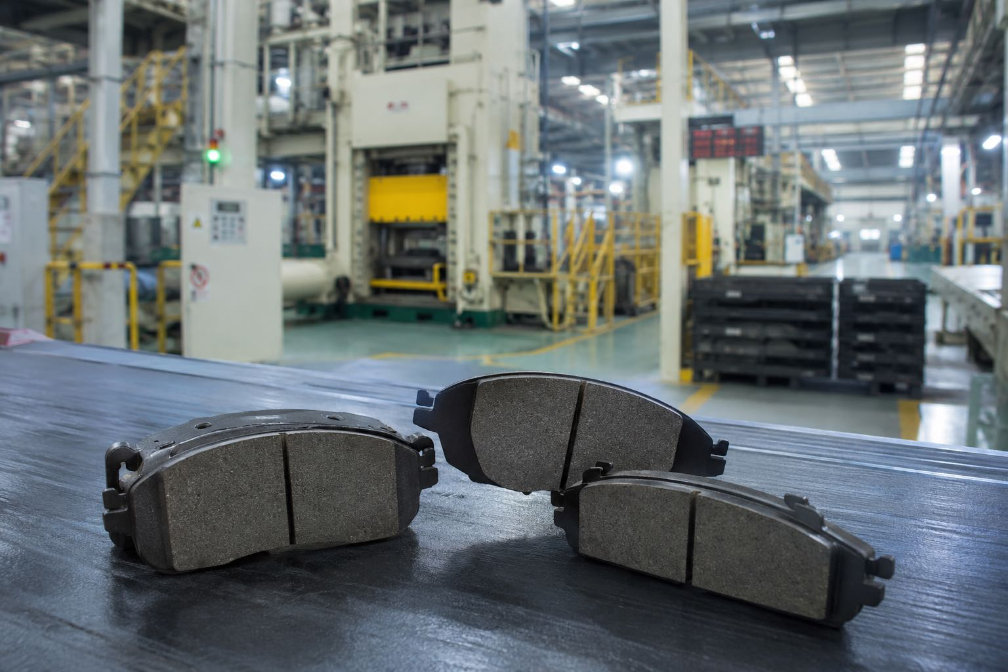
Some suppliers are trading companies, while others operate their own brake pad manufacturing facilities.
For long-term OEM or private label projects, working directly with an experienced brake pad manufacturer can provide better control over:
- Friction material formulations
- Raw material selection
- Production consistency
- Quality inspection
- Product development
- Custom packaging
- Lead times
- Technical communication
A manufacturer should be able to clearly explain its production process, equipment, testing capabilities and quality control system.
If possible, request factory photos, production videos, certificates and testing information before moving forward.
2. Review Quality Certifications
Brake pads are safety-critical automotive components.
Certifications therefore matter when evaluating an OEM brake pad supplier.
Depending on your market and sourcing requirements, buyers may look for quality management certifications such as:
IATF 16949
IATF 16949 is one of the most important quality management standards in the automotive industry.
It focuses on areas including:
- Defect prevention
- Process control
- Product consistency
- Risk management
- Continuous improvement
For professional automotive buyers, an IATF 16949 certified brake pad manufacturer generally demonstrates a stronger automotive quality management system.
ISO 9001
ISO 9001 provides another important framework for consistent quality management and process control.
Certificates alone, however, are not enough.
Buyers should also understand how these quality systems are actually implemented during daily production.
3. Evaluate Friction Material Formulation Capability
The friction formulation is one of the most important factors affecting brake pad performance.
Different markets, vehicles and driving conditions may require different characteristics.
Common brake pad formulations include:
- Ceramic brake pads
- Semi-metallic brake pads
- Low-metallic brake pads
- NAO brake pads
These formulations can differ in braking performance, noise level, dust generation, temperature resistance, wear characteristics and pedal feel.
A capable brake pad OEM manufacturer should not simply offer one universal formulation for every application.
Instead, the manufacturer should be able to recommend or adjust formulations according to vehicle application, target market and customer requirements.
For private label brands, this capability becomes particularly important when developing a differentiated product range.
4. Ask About Product Coverage
Large product coverage can significantly simplify sourcing for distributors and importers.
Before selecting a supplier, ask:
- How many brake pad references are available?
- Which passenger car applications are covered?
- Are SUV and light truck applications available?
- Are commercial vehicle brake pads available?
- How frequently are new references developed?
A broader catalog allows buyers to consolidate more products with one supplier instead of managing multiple factories.
This can reduce purchasing complexity, communication costs and logistics pressure.
5. Understand the Manufacturer's Quality Control Process
Consistent quality is often more important than achieving excellent performance on a single sample.
A sample can be good.
The real question is whether the 10,000th set performs like the first set.
That is why professional buyers should evaluate the factory's brake pad quality control process.
Quality control may include:
- Incoming raw material inspection
- Mixing process control
- Pressing parameter control
- Heat treatment monitoring
- Dimensional inspection
- Friction performance testing
- Noise and vibration evaluation
- Final product inspection
- Batch traceability
For distributors and automotive brands, batch-to-batch consistency directly affects customer complaints, warranty costs and brand reputation.
6. Check Production Capacity and Delivery Stability
Production capacity is especially important for growing brands and high-volume distributors.
Ask the manufacturer about:
- Annual production capacity
- Number of production lines
- Normal lead time
- Peak-season lead time
- Raw material management
- Capacity for repeat orders
- Production planning for large-volume projects
A supplier may offer competitive prices but still become a problem if production cannot keep up with your sales growth.
The right supplier should support not only your first order but also your future volume.
7. Evaluate OEM and Private Label Capabilities
If you are building your own brake pad brand, OEM flexibility should be evaluated early.
A professional private label brake pad manufacturer may support customization such as:
- Friction formulations
- Product specifications
- Brand printing
- Product labels
- Color boxes
- Cartons
- Product catalogs
- Packaging design
- Market-specific product ranges
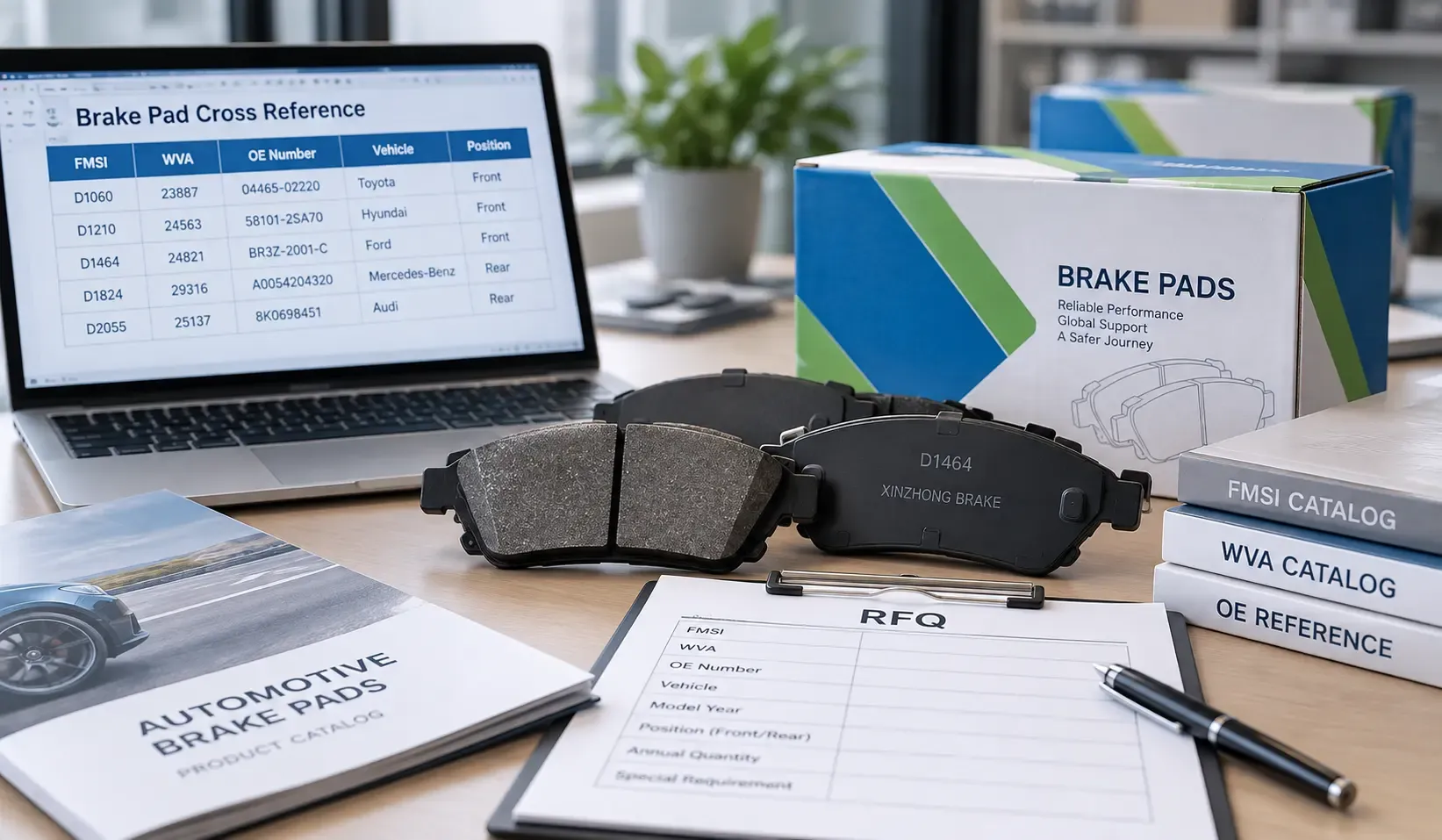
Before requesting a quotation, provide as much information as possible about your target market, vehicle applications, expected quantity and packaging requirements.
The clearer the project information, the more accurate the manufacturer's recommendation and quotation will be.
8. Do Not Choose a Supplier Based on Price Alone
Price matters.
But brake pad sourcing should never become a competition to find the lowest number on a quotation sheet.
An unusually low price may come from differences in raw materials, formulation, manufacturing process, quality control or testing standards.
Instead of asking only:
“What is your lowest price?”
Professional buyers should also ask:
“What am I getting at this price?”
Compare suppliers based on total value:
- Product performance
- Quality consistency
- Certifications
- Application coverage
- Technical capability
- OEM flexibility
- Delivery reliability
- Communication efficiency
- After-sales support
For long-term automotive aftermarket business, supplier stability usually creates more value than a small short-term price difference.
A Practical Brake Pad Supplier Checklist
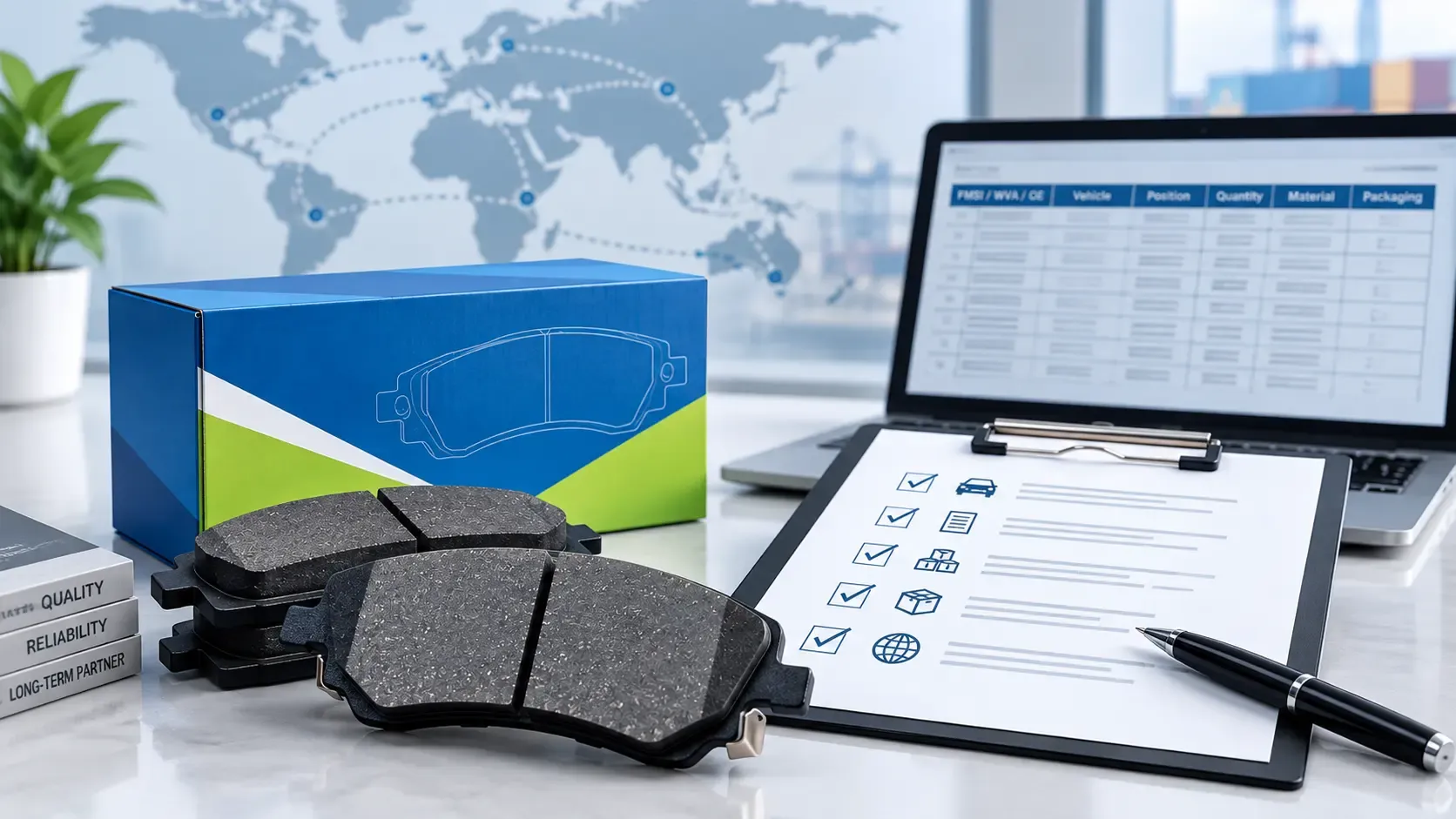
Before choosing a brake pad supplier, confirm the following:
Item | What to Check |
|---|---|
Manufacturer | Real production facility and manufacturing experience |
Certification | IATF 16949, ISO 9001 and relevant market requirements |
Formulations | Ceramic, semi-metallic, low-metallic and NAO options |
Product Range | Coverage for your target vehicle applications |
Quality Control | Raw materials, production, testing and final inspection |
Capacity | Stable supply for current and future order volumes |
OEM Service | Branding, packaging and formulation customization |
Technical Support | Ability to recommend suitable products |
Delivery | Stable lead times and production planning |
Communication | Fast and professional project response |
Why Work With Xinzhong Brake?
Xinzhong Brake (Qingdao) Auto Parts Co., Ltd. is a professional brake pad manufacturer and OEM supplierserving automotive aftermarket customers worldwide.
Our manufacturing capabilities include:
- IATF 16949 and ISO 9001 certified quality management
- More than 200 friction material formulations
- Over 6,600 brake pad references
- Ceramic, semi-metallic, low-metallic and NAO product lines
- Passenger car, SUV and commercial vehicle applications
- Annual production capacity of approximately 30 million pieces
- OEM, ODM and private label support
- Products supplied to more than 70 countries and regions
Our focus is not simply producing brake pads.
We work with distributors, importers and automotive brands to develop stable product ranges based on their target market, vehicle coverage and performance requirements.
Conclusion
Choosing a reliable brake pad manufacturer requires more than comparing quotations.
Buyers should evaluate the supplier's manufacturing capability, certifications, friction formulations, quality control, application coverage, production capacity and OEM support.
A good supplier delivers products.
A reliable manufacturing partner helps you build a product line that can grow.
If you are sourcing OEM brake pads, developing a private label brake pad brand, or looking for a long-term brake pad manufacturing partner, contact Xinzhong Brake with your target market, required applications and estimated order quantity.
We can help evaluate the most suitable product and OEM solution for your project.
FAQ
What should I look for in a brake pad manufacturer?
Focus on manufacturing experience, automotive quality certifications, friction formulation capability, product coverage, quality control, production capacity and OEM support rather than price alone.
Can brake pads be customized for private label brands?
Yes. Depending on the manufacturer, private label brake pads can be customized in areas such as formulations, branding, labels, boxes, cartons and product range selection.
What information should I provide when requesting an OEM brake pad quotation?
Provide your target market, brake pad part numbers or vehicle applications, estimated quantity, preferred formulation, packaging requirements and any specific performance requirements.
Why is IATF 16949 important for brake pad manufacturing?
IATF 16949 is an automotive quality management standard focused on process control, defect prevention, consistency and continuous improvement. It is an important indicator when evaluating automotive component manufacturers.
Which brake pad formulations are commonly available for OEM projects?
Common options include ceramic, semi-metallic, low-metallic and NAO brake pads. The suitable formulation depends on the vehicle application, target market, performance expectations and price positioning.