Industry Trends & Market Insights
How to Import Brake Pads from China: 2026 Guide
Learn how to import brake pads from China, including supplier selection, MOQ, samples, quality checks, OEM branding and shipping. Meet us at Automechanika Shanghai 2026.
How to Import Brake Pads from China: A Practical Guide for Distributors (2026)
Importing brake pads from China can help automotive parts distributors expand their product range, develop private label brands, and establish direct relationships with manufacturers.
However, choosing the right supplier involves more than comparing prices.
Vehicle compatibility, friction material, product consistency, minimum order quantities, packaging, and shipping arrangements can all affect the success of an import project.
This guide explains the key steps for sourcing brake pads from China in 2026, especially for distributors and aftermarket parts businesses planning their first order.
1. Identify the Brake Pad Applications Your Market Needs
Before contacting manufacturers, start with the vehicles that are most common in your target market.
Different countries have different vehicle populations and aftermarket requirements.
For example:
- Middle East: Toyota, Nissan, Hyundai, Kia, and an increasing number of Chinese vehicle brands.
- Africa: Toyota, Nissan, Hyundai, Kia, and selected European and Chinese models.
- Southeast Asia: Toyota, Honda, Mitsubishi, Hyundai, Kia, and locally popular vehicle models.
- Latin America: Chevrolet, Volkswagen, Fiat, Hyundai, Toyota, and other market-specific applications.
These are general examples. Actual demand should be verified against local vehicle registrations, workshop demand, and distributor sales records.
Instead of requesting a quotation for hundreds of applications immediately, consider starting with 10–20 frequently sold references.
When possible, provide the manufacturer with:
- OE part numbers
- FMSI or WVA references
- Vehicle make, model, and production year
- Front or rear axle position
- Product photographs or dimensions when part numbers are uncertain
Practical tip: A clear application list can reduce quotation errors and prevent costly fitment mistakes.
2. Choose the Right Brake Pad Material
Brake pad material affects braking characteristics, noise, dust, rotor wear, and production cost.
The most common aftermarket options include:
Semi-Metallic Brake Pads
Semi-metallic formulations are widely used in the aftermarket.
Depending on the formulation and application, they can provide strong braking performance and good heat resistance.
Ceramic Brake Pads
Ceramic formulations are often selected for passenger vehicles where noise comfort and dust characteristics are important.
However, performance varies by formulation. Not every ceramic brake pad is automatically quieter or better than a semi-metallic alternative.
Low-Metallic and NAO Brake Pads
Low-metallic and non-asbestos organic formulations provide additional options for different markets and driving requirements.
When discussing materials with a supplier, ask for relevant test information rather than relying only on the material name.
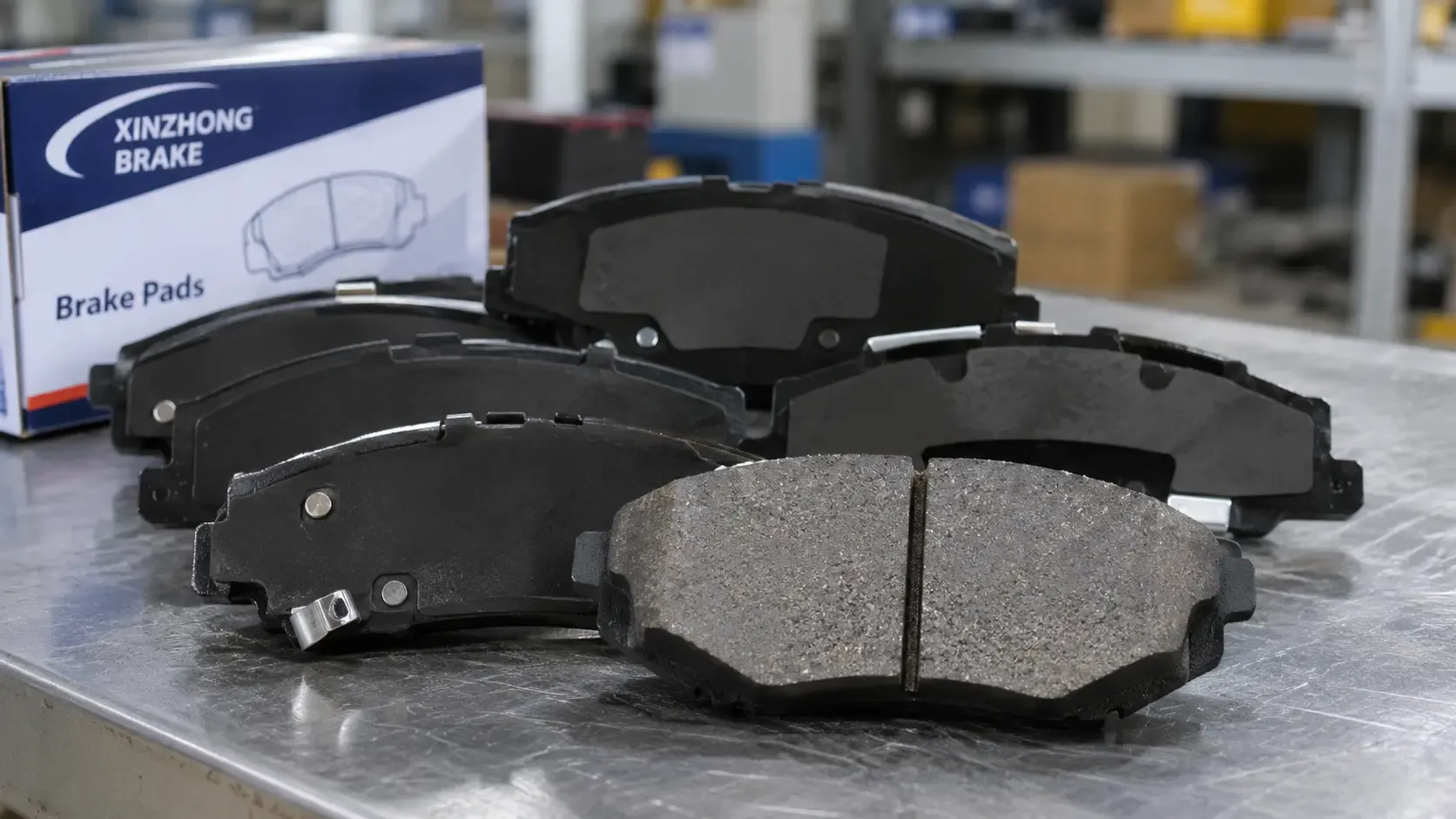
At Xinzhong Brake, we offer multiple friction material options, including ceramic, semi-metallic, low-metallic, and NAO formulations.
3. Verify the Manufacturer Before Placing an Order
A competitive price is important, but manufacturing consistency is equally critical.
Before choosing a brake pad supplier, ask several practical questions:
- Does the company manufacture brake pads directly?
- Can it provide relevant quality management certificates?
- How does it control raw materials and production consistency?
- What testing methods are used for friction performance and noise?
- Can it confirm OE, FMSI, or WVA references before production?
- Does it support OEM packaging and private label projects?
- What happens if a quality issue is identified after delivery?
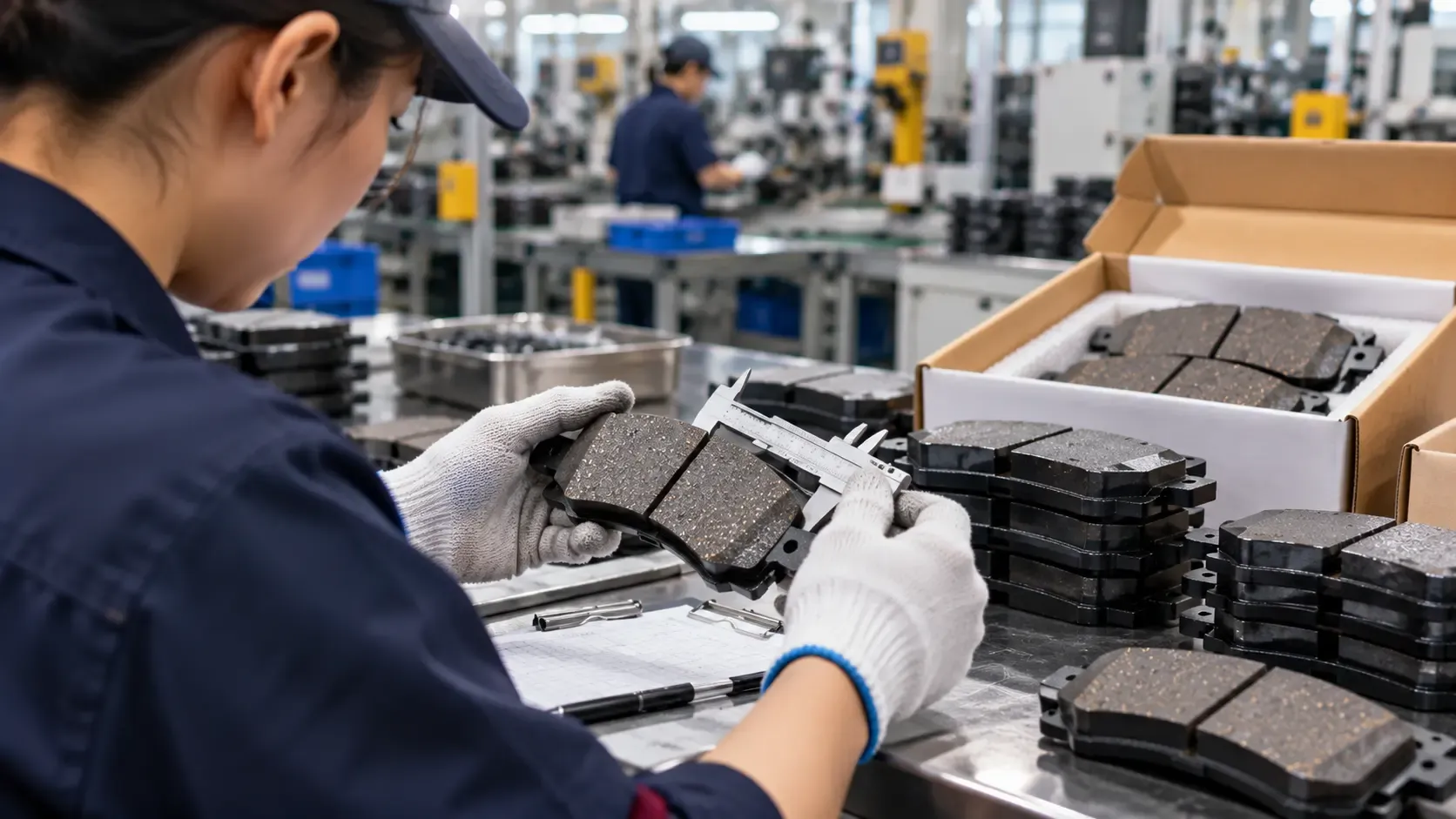
A reliable supplier should be able to explain its manufacturing and inspection procedures clearly.
For example, Xinzhong Brake operates under IATF 16949 and ISO 9001 quality management systems and can discuss relevant product testing information for selected formulations.
Importers should also confirm whether specific product approvals or certifications are required in their destination market.
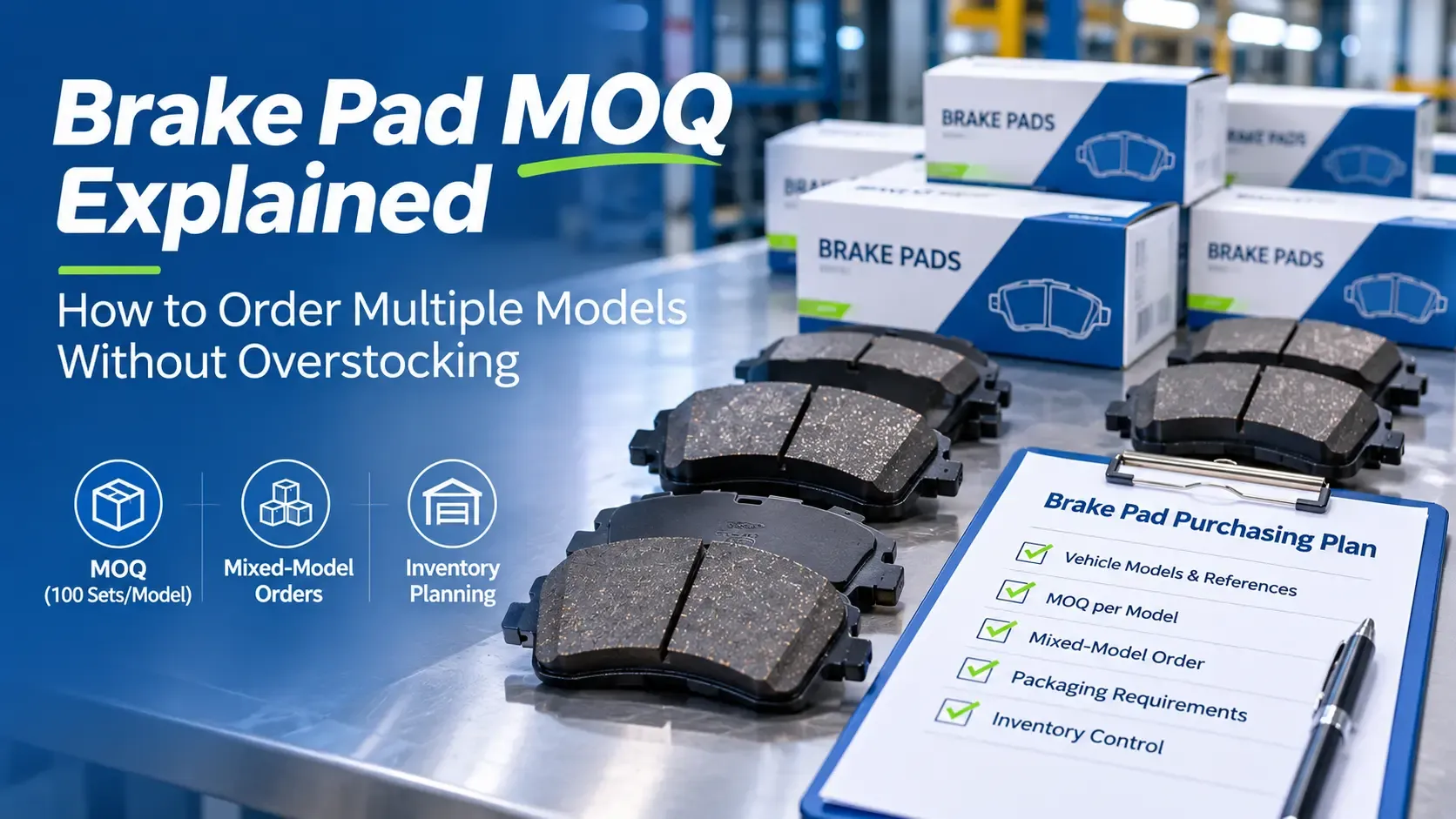
4. Understand MOQ and Mixed-Model Orders
Minimum order quantity, or MOQ, is one of the most common concerns for new importers.
A distributor entering a new market may not want to purchase a large quantity of a single brake pad reference.
Instead, it may need a combination of different applications.
For example, a trial order could include:
Brake Pad Reference | Trial Quantity |
|---|---|
Application A | 100 sets |
Application B | 100 sets |
Application C | 100 sets |
Application D | 100 sets |
Application E | 100 sets |
Total | 500 sets |
This is an illustrative order structure, not a universal industry MOQ.
At Xinzhong Brake, we can discuss mixed-model orders, with 100 sets per reference commonly used as a starting point for eligible existing applications.
Actual MOQ depends on the product, friction formulation, packaging requirements, and whether new tooling is needed.
For distributors developing a new brand, starting with a carefully selected product range can be more practical than purchasing a large catalogue immediately.
5. Request Samples Before Bulk Production
Samples allow importers to evaluate product quality before committing to a larger order.
A useful sample evaluation may include:
- Dimensions and fitment
- Backing plate and friction material appearance
- Installation compatibility
- Braking performance
- Noise and dust characteristics
- Packaging quality
Where practical, samples should be evaluated under representative local driving conditions.
Importers should also ask whether the tested sample formulation will be used for subsequent commercial production.
Important: A successful sample test is a useful first step, but it does not replace production quality control or any legally required product approvals.
6. Plan Your Private Label Packaging
For distributors building their own aftermarket brands, packaging is part of the commercial strategy.
Common customization options may include:
- Brand logo and packaging design
- Product reference labels
- Barcode and application information
- Carton specifications
- Market-specific labeling requirements
Before confirming a packaging design, discuss minimum quantities, printing costs, and production lead times with the manufacturer.
Xinzhong Brake supports OEM and private label brake pad projects, including customized packaging arrangements.
If you're planning to launch your own aftermarket brand, explore our guide on How to Start Your Own Brake Pad Brand.
7. Confirm Pricing, Shipping Terms, and Lead Time
A brake pad quotation should clearly specify what is included.
Before placing an order, confirm:
- Unit price and currency
- Incoterms and named delivery location
- Packaging costs
- Production lead time
- Payment terms
- Freight arrangements
- Required export and import documentation
For example, an FOB quotation and an EXW quotation may cover different responsibilities and costs.
Do not compare quotations based only on unit price.
Also, confirm import duties, customs requirements, and product conformity obligations with a qualified local customs or compliance specialist.
For Xinzhong Brake, an initial production order commonly requires approximately 45–60 days, depending on the confirmed product range, quantity, and customization requirements.
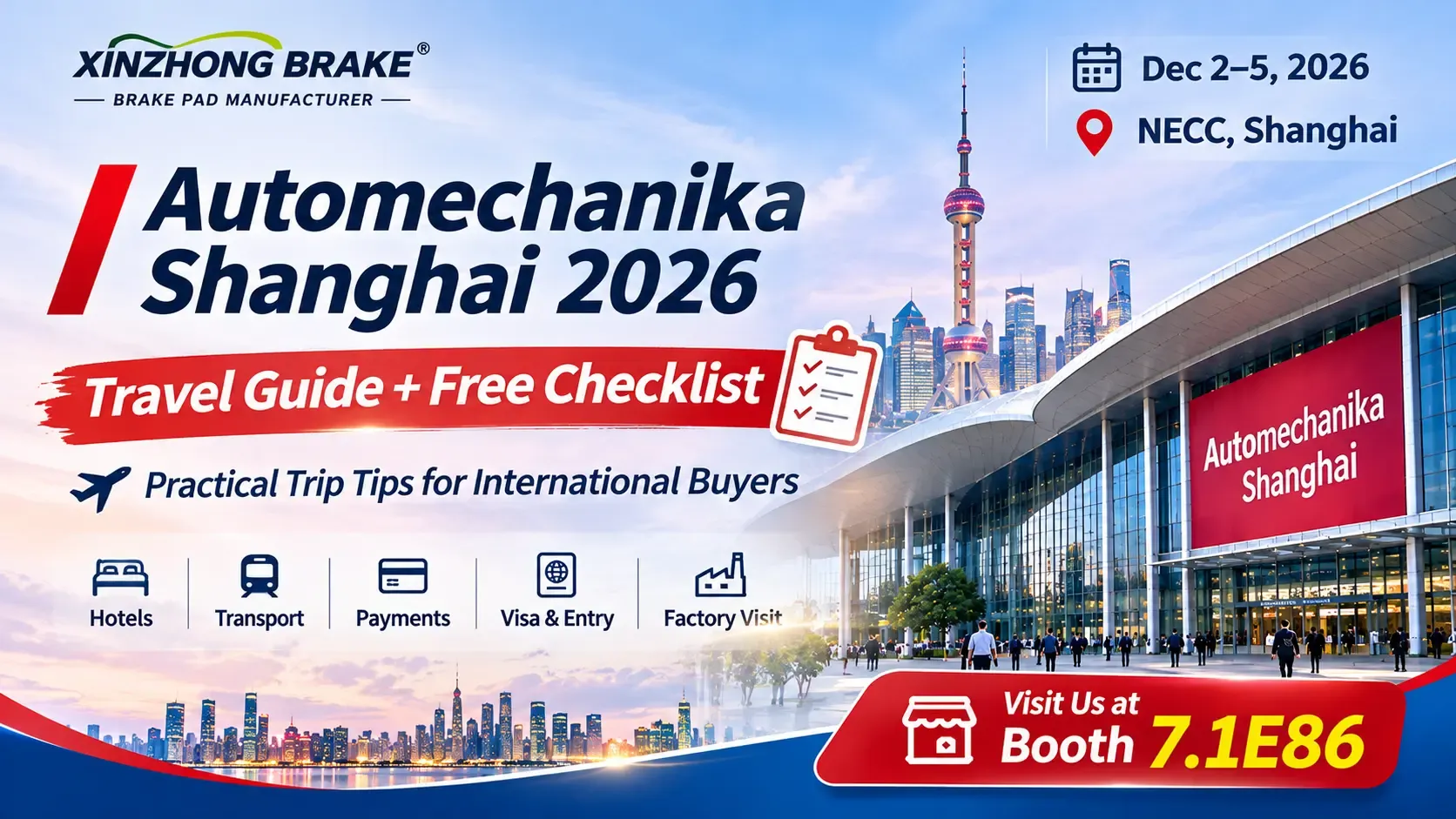
8. Meet Your Brake Pad Manufacturer at Automechanika Shanghai 2026
Online communication is convenient, but meeting a manufacturer face-to-face can help importers evaluate a potential long-term partnership.
Automechanika Shanghai 2026 provides an opportunity for automotive aftermarket businesses to meet suppliers, compare products, and discuss sourcing projects in person.
Planning your visit? Learn more about Xinzhong Brake at Automechanika Shanghai 2026 and arrange a meeting with our team at Booth 7.1E86.
If you are planning to attend, consider preparing a shortlist of vehicle applications and part numbers before the exhibition.
This allows you to spend more time discussing actual product requirements rather than collecting general catalogues.
Meet Xinzhong Brake in Shanghai
Exhibition: Automechanika Shanghai 2026
Booth: 7.1E86
Location: Shanghai, China
Our team will be available to discuss:
- Passenger-car brake pad applications
- Ceramic and semi-metallic friction materials
- OEM and private label manufacturing
- Mixed-model orders
- Samples and product testing
- Long-term distribution cooperation
Whether you already import brake pads or are preparing to launch your own brand, we welcome the opportunity to discuss your sourcing requirements.
9. Build a Long-Term Supply Relationship
The first order should not be evaluated only by its purchase price.
For a distributor, long-term success also depends on stable quality, repeat-order consistency, application coverage, and reliable communication.
A practical sourcing strategy is to begin with selected high-demand applications, evaluate product performance, collect market feedback, and expand the product range gradually.
This helps both the importer and manufacturer establish a clearer understanding of market requirements.
Looking for a Brake Pad Manufacturer in China?
Xinzhong Brake manufactures passenger-car brake pads for aftermarket distributors and private label businesses.
We offer over 3,000 brake pad references, multiple friction material options, and OEM packaging support.
If you are looking for a manufacturing partner, send us your OE numbers, FMSI references, or vehicle application list.
Our team can help review available applications and prepare a targeted quotation.